Monday, January 11, 2016

Round Up: January 11

Do you remember the last meal you ate? What were the contents of your food selection? Protein, vegetables, grains? Remember back in middle school, when teachers would give health ed courses and explain the food pyramid?  Last week for Team AP Bio, our class got to revisit health ed by reflecting on the eating habits that Americans have, over time, ingrained in the food industry.  During the week, we spent class time conversing about the importance of maintaining moderation in life. As in everything that we do, it is important to remember to keep a balanced lifestyle. America's gluttony has become somewhat of a mystery. The film, "In Defense of Food," brings up the question of why America consumes the largest amount of food per year, compared to the other countries? The answer lies in inherently in the nature of food advertising. In the film, Michael Pollan, who is a journalist, speaks about how food companies can trick consumers into eating products that are unhealthy.
hello

Screen Shot 2016-01-11 at 9.18.47 PM
Example of white bread today
Another point that film addresses is the lack of eating “silent foods” as Michael Pollan calls it. Silent foods are foods that are natural, such as fruits and veggies! Eating foods with vitamins such as calcium, omega 3s, and iron are also very important towards maintaining a good diet. According to the film, every additional portion of fruit or vegetable decreases the risk of heart disease and stroke. American’s diet heavily consists of food that people eat too much of, for example red meat. Before watching this video, I had never realize how much meat my family includes in our meals. Eating too much meat can result in developing health restrictions, like ones mention in the previous paragraph. Many meat-producing companies have complained and filed lawsuits after food and health administrations released new information about the negative impacts of consuming a lot of meat. Of course, businesses is business, and these companies will do what they have to do to protect the company’ name. People are scared. They do not want to eat food that will harm their health. However, we do not have to cut out meat completely our of our diet. Eating certain small amounts of servings at a time can help to transition into a more balanced diet. Scientists have already stated, after multiples trials of research, that the more meat a person eats, the more risks that the person’s healthy will have. Red meat consists of a Pollan states several times in his film that moderation is the key word in eating healthy.
iStock_000019323130XSmall-fruit-veg
Silent Foods!

Monday, December 28, 2015

Round up: December 28, 2015

Dear AP Bio, do you still remember the Google World Map we created together on the first day of school? I still remember the excitement exuded from all of us as we entered the most memorable place in the world, with the hope to use this as a chance to know each other better.
Screen Shot 2015-12-27 at 10.03.52 PM
Looking back, that's the mark of the beginning of our journey and from that point on, we've walked each other through 6 seasons, exploring the fascinated World of Biology, and came to recognize the indispensable contribution each member made to our unbreakable community in which every members has an intregral part.
In season one, we built the foundation for our journey as we explored the Characteristics of Life, the uniqueness of water and the importance of Carbon in organic chemistry. I still remember the day when Mrs.Girard brought a special guest--fire--to help us differentiate between what's alive and what's not alive to make the class more dynamic and memorable.
Screen Shot 2015-12-28 at 12.31.45 AM.png
In season two, we became fascinated with the job of the cell membrane which is semi-permeable and controls the passage of certain substances in and out of cell. We also came to realize the indispensable role enzymes play in our body as they lower the activation energy, thus enabling the chemical reaction to take place, such as the glucose uptake by cells and blood clotting on a wound.
Screen Shot 2015-12-28 at 12.29.53 AM
In season three, we challenged ourselves by entering Breakthrough Junior Challenge and used this as a chance to research on our favorite topics. It's interesting that we covered such a broad range of topics and we learned so much from the tutorial videos each one of us made. In Eden's tutorial video on Diabetes, I became engrossed with the difference between Diabetes 1 which is hereditary and Diabetes 2 which is influenced by unhealthy life styles and acquired bad habits.

In season four, we explored two processes that are most intrigal to our lives and the ecosystem--Cellular respiration which all organisms use to break down food to provide energy for basic activities and Photosynthesis which plants use to convert light energy to chemical energy. Do you still remember the game we played to save Jared's lives because of the malfunction of electron chain during his cellular respiration process? Do you also remember the two  games we created to help us review the concepts?
Screen Shot 2015-12-28 at 12.24.01 AM
Then, we jumped into a relaxing season where we learned the Cell Signaling from the case study "my dog is broken" while at the same time delving deeper into Mitosis and Meiosis. The Meiosis animation videos we created are amazing!!
[youtube https://www.youtube.com/watch?v=gRc-sccIsuE]
Last came the summit of our semester--the genetics. I could see every one was so engrossed by this season because genetics explain to us the genes that relate us with our ancestors and offsprings. The medical family pedigree enabled us to wonder at the pattern of heredity of each genetic disease or abnormality. Finally, we ended this semester with the genetic symposium which enables us to gain a deeper understanding about different genetic disorder. Since most of us want to venture into medical field in the future I think this project is especially beneficial as it enabled us to experience the emotional aspect concerning each disease as we interviewed patients, doctors, or researchers who recounted to us the vivid first-hand experience when dealing with the disease.
Screen Shot 2015-12-28 at 12.12.37 AM
While we are exploring in the rigorous academic field, we are also leaving behind our digital footprints along the way, hinting on our personalities, our fascination with technological advancement and our observations about trivial things through the delicate use of words.Knowing that our blogs will be seen in public, each one of us tried to polish our digital presence to the best of our ability, correcting all the grammar mistakes and trying to insert many pictures or videos to fascinate our potential readers.  Exploring every blog is like exploring in Alice Wonder Land and we can easily get lost in the words of thoughts. The blogs are essentially what's unique about this class in a sense that while they unite us they teach us how to be better at our writing and how to use fascinating technologies to embellish the black and white writing.
Screen Shot 2015-12-27 at 11.03.50 PM
I am really looking forward to next semester because our journey together will become more amazing.

Monday, December 14, 2015

Round Up: December 14, 2015

     Wow, did we have an exciting few weeks! We started December off by finalizing our topics for the Genetics and Health Symposium. I chose to research Familial Adenomatous Polyposis. Eden chose Hemophilia A, Isabelle researched Tay Sach's Disease, and Bianca chose Huntington's Disease. Sofia selected Duchenne Muscular Dystrophy, Julia decided on Cri du Chat, and Monica chose Cystic Fibrosis. The assignment was to research our chosen genetic disorders and become experts on them. We would need to do a lot of research in order to present to our classmates and teacher through VoiceThread.
This is a screenshot I took of six of the presentations in VoiceThread.
     The Genetic Symposium was put on the back burner for a little while, or rather, we did that for homework and focused on other topics in class. Following the theme of genetics, we all collected our family's medical histories. In search for inheritable disorders, we created our pedigrees. Originally we were supposed to have a discussion and share what we found out at the beginning of the month, but due to many unplanned absences, we were unable to all be together on one. We finally shared a couple days ago, and I learned about some disorders that were new to me.
     On December 3rd, we went on an awesome field trip to visit Santa Clara University's graduate engineering program. The trip down was super fun because we all squished into one school car and were able to talk and eat. Wonderfully enough, it was raining that day, so when we arrived, we ran inside the building for cover. Our first stop was a room filled with penny games that the graduate students had built. Playing the games was a blast, and getting to see what grad students are making themselves was awesome. One of the most fun games was a digital version of Whack-a-Mole; buttons light up, and you try to push them as fast as you can. I played against Sofia, and the final score was super close. Another game that I found challenging was trying to move a ball up a ramp and get to the top. The slightest wrong movement would cause the ball to fall back to the bottom of the ramp.
Here you can see people playing the digital Whack-a-Mole penny game.
     After spending a bit of time with the penny games, we were joined by students from another high school's AP Biology class. Then we went to the maker space. There we saw a couple of 3D printers in action and got to look at some of the products. After a brief explanation of the room and its niceties, we were moved to another room to watch a demonstration using a bioprinter. This was the big reveal, what we had been waiting for. Afterwards we were given a mini lecture on bioprinters which was very informative. Once back at NDB, we showed the students from the other school our zSpaces. The technology we get to use and experience in our AP Biology class is amazing!

     We continued in the days after the field trip learning and reviewing Mendelian genetics, DNA replication, and protein synthesis. We also watched the NOVA episode "Cracking the Code of Life." On Thursday the 11th, our Genetics and Health Symposium projects were due, and we discussed them the very next day. This past season was full of many cool opportunities to immerse ourselves into the world of genetics and technology. Hopefully the next season does the same!

All images are original.

Monday, November 30, 2015

Round Up: November 30

After our unit on cell signaling, Team AP Bio jumped right into our next season: Genetics. We all flashed back to Honors Bio with a review of Mendel's Pea Plants. After relearning Punnett Squares, we went into depth on DNA Replication.
Helicase, topoisomerase, and ligase: which is which? Learning about the process of DNA Replication was definitely a review of enzymes for all of us. 
DNA_replication_en.svg.png
The process of DNA replication.
Finally, we spent an entire hour discussing our assignments for the last unit of this semester. Family Medical History, DNA Extraction, and Genetic Symposiums, oh my! Instead of creating a family tree with pictures and shakily-written names, just as we did in elementary school, we were told to create a family tree, including any medical afflictions. Screen Shot 2016-05-13 at 8.50.24 AM
The beginning of my family medical history
"Go crazy," we were told. Well, not really, but essentially. Anything from glasses or freckles, to anemia or cancer. Over three generations, what could we possibly find in our medical history? Any trends? I, myself, was already planning my medical history out. I could tell that everyone else was, too, because Bianca had started writing things down and Julia was animatedly discussing possibilities with Mrs. Girard and with me.
This was the perfect project for Thanksgiving - as we all spend time with our families, we can connect and learn more about who we are by discussing our medical past. And we can all be thankful for the modern technologies which have allowed all of us to exist today. 
IMG_3706
The DNA I extracted.
On top of the family medical history, we were informed of an extra credit opportunity: DNA extraction. With a strawberry (or other piece of fruit), dish soap, and alcohol, anyone can extract the gloop which is DNA. Julia completed this project with her sisters, Monica stuck to strawberries, Isabelle used a banana, and I tried out different fruits before concluding that the strawberry worked best. You can see my extraction here
Works Cited
DNA Replication. Digital image. Wikipedia. Wikipedia, n.d. Web. 13 May 2016.

Thursday, November 26, 2015

Round Up: Learning is Fun!


The past few weeks of school my classmates and I studied cell signaling, mitosis and meiosis. We conducted a case study called, My Dog is Broken, trying to solve the mystery of what caused the dog to cease to have an erection. The case study showed the importance of the entire process of signaling working together to pass the response to the final destination. If one part of the signal is not working properly the entire signal will not be able to perform its function 


Unknown.jpeg

Overview of Cell Signaling                                Reece, Jane B., and Lisa A. Urry. Campbell Biology. Tenth ed. 2011. Print.

      Before the chapter test, we were assigned a project on the topic of meiosis. The rules were, the project must be in video format and the process of meiosis had to be seen dividing and crossing over. The rest was up to our creativity. I enjoyed the project because of the creativity needed and accessibility of the videos. My classmates and I were able to watch each others videos and they were a great review before the test. My favorite activity by far was the mitosis animal cell quiz. When you hear  quiz your brain automatically freaks out, but this was not a usual quiz. The first part of the quiz was creating each step of mitosis in an animal cell using arts and craft supply. There was really not limit to what could be produced, but it had to be in a 90-minute period of time. My classmates and I each chose one step of mitosis to complete. We had to work together cohesively to figure out what object was going to be used for the nucleus, the chromosomes, the spindle fibers, and so on. I had fun communicating and discussing what would work best with each aspect of mitosis. Since I am a visual learner, being able to see visually and in person what mitosis looks like (roughly) made the process so much easier to understand. We were having so much fun constructing our animal cells the time flew. By the end of class everyone was frantically gluing pieces. Luckily everyone finished before the bell rang. 

photo-31.JPG
The great artwork AP Bio created. Mitosis in animal cells, minus a few chromosomes that fell off.

 The next day, after all the glue was dried, Team AP Bio got back together and had to explain what was happening in the different steps of mitosis while Mrs. Girard was filming us.  Being put on the spot was good practice for the test, because you have to answer questions quickly. Overall, I had a great time while at the same time learning more about the different processes of living organisms. When education is enjoyable it doesn't even seem like you are learning. It's magic!

 Here is the video Christine and I created!
https://youtu.be/bYnlM69QXig


Featured Image:  Bost, Kim. "Party in the Air." Flickr. Yahoo!, 2 June 2008. Web. 25 Nov. 2015. <https://www.flickr.com/photos/bost/2545318262>.

Monday, November 2, 2015

Round Up: It's Not Easy Being Green

For the past few weeks, Team AP Bio has been learning about the process of photosynthesis with a little review of cellular respiration mixed in.  Cells with mitochondria already have to run many processes simultaneously in order to keep up cellular respiration.  The cells of photosynthetic organisms have the extra challenge of adding the processes within photosynthesis to the mix.  That is a lot to juggle!


Noor. Kermit Drawing. Digital image. Sketchport. Sketchport, 2015. Web. 28 Oct. 2015.

Our foray into photosynthesis included two labs, an independent project, and even a video game, but my favorite activity was the chromatography lab.  My classmates and I gathered leaves from around Notre Dame’s campus.  We used chromatography techniques to separate various pigments found in the thylakoid membrane within the leaves’ chloroplasts.  Studying different pigments leads to knowledge of the types of light that plants grow best under.  Scientists can use chromatography to make agriculture more efficient! The most common pigments we found were chlorophyll a and chlorophyll b, which reflect green light.   Other pigments included xanthophyll (yellow), carotenoids (orange), and anthocyanin (red and purple).  Because both chlorophyll reflects green light, we were able to infer that the plants with high levels of chlorophyll grew best under red and blue light.  When I think of a leaf, the first word that comes to my mind is green, but now all I can only think of the colorful pigments spread out on the chromatography strips.  It is amazing how many colors a leaf can hide under its green exterior.
Plant Pigment Chromatography. Digital image. Pearson. Pearson Education, Inc., n.d. Web. 2015.

The other activity that stood out was the test review.  Normally I find review terribly boring because it usually entails a lecture, but Mrs. Girard threw us a curveball. We split into two teams and created board games that covered both cellular respiration and photosynthesis.  My team designed a game inspired by baseball and named “Three Strikes, You’re Dead.”  As a kinetic learner, I loved getting crafty and using my hands to physically create the game.  It recalling the material spatially in my head much easier.  Also, I noticed that many of the questions that my team wrote for game were similar to those on the test.  Writing our own questions made us stop and think which information would be crucial to know in terms of the big picture.  As a cherry on top, we spent whole block trying each other’s games out.  Overall making the board game aided my memory, made my studying more efficient, and was enjoyable to both play and make.  I really hope we get to do something similar in the future.
A picture of us playing the board games that was taken from Mrs. Girard’s twitter.


Sunday, October 18, 2015

Round Up: Investigating the Impact of Poison on Cellular Respiration

These past few weeks, my AP Bio class and I have been focusing on the cycles of life specifically the cycles of aerobic respiration. Now, trying to understand glycolysis, the citric acid cycle, and the electron transport chain can be pretty confusing and complicated because so many things are all happening at once. You know, it is crazy to think that our body can give us thousands of ATP molecules in a couple of seconds to help our bodies function!!! Anyway, we all worked on an activity on Cogentedu.com called Investigative Case: Cellular Respiration. I enjoyed this activity because it not only gave me a clearer understanding of all of the three major cycles but it also gave us me situation where I had to use my knowledge of the cycles and apply it to daily life.
The activity set up a scene where a man from the C.I.A. was poisoned, I was a toxicologist, and it was my duty to save this man’s life. The man was poisoned and experienced symptoms of dizziness and shortness of breath. To save him, I had to determine the specific cycle in cellular respiration that was being affected and then from there identify the specific poison that affected the person. The activity had us look at three pieces of data to help us determine the impact of the poison which are as follows: creation of pyruvate molecules. creation of NADH, and the amount of 1M proton concentration. The activity gave us control data of the amount of each category that was present in a functioning human body cell; the activity also gave us the changes in amounts of each category present in one of the poisoned man’s body’s cells. According to the data given, the man did not have a significant change in the production of pyruvate molecules, the amount of NADH molecules increased, and the amount of 1M proton concentration decreased. As a result, I believed that cyanide was the poison that affected him because cyanide impacts the electron transport chain by not allowing hydrogen molecules to bond to oxygen, become water, and then exit the electron transport chain. Since the data revealed that the amount of pyruvate molecules stayed relatively the same, I reasoned that cyanide does not impact glycolysis. However, the data also revealed that the amount of NADH produced had increased which makes sense because glycolysis continued to run and create more pyruvate molecules which the citric acid cycle took and made more NADH. And since the electron transport chain is inhibited by cyanide, the NADH electron carriers could not move on and donate electrons to the electron transport chain since the electron transport chain was already backed up with electrons. Lastly, the data revealed that 1M proton concentration decreased which makes sense since electrons are not passed down because if electrons are not passed down, then energy is not released which is used to pump protons from the matrix to the intermembrane space of the mitochondria and create a functioning proton gradient.
I was pretty happy to find out that my hypothesis was accurate because I felt like it meant that I went about the right away in understanding the information presented. I really enjoyed this activity and we are going to do another one hopefully on the process of photosynthesis so I am looking forward to that. :)

Photo of Cellular Respiration Process >> Found on Free Images from Bing; Original address:http://bioap.wikispaces.com/file/view/16.JPG/121958045/16.JPG

Image of CIA logo >> Found on Free Images from Bing; Original address:http://pre00.deviantart.net/c04d/th/pre/f/2009/051/7/6/cia_grey_logo_by_krumbi.jpg

Tuesday, May 19, 2015

Our Year Together 2014 - 2015

Being a teacher is a calling and not for the faint of heart. There are endless hours of preparing lessons, setting up labs, writing assessments, correcting papers, attending meetings and professional development, tutoring students, calming fears, cheering on, encouraging creativity and collaboration, and learning. As the end of the year approaches, I feel the exhaustion and the pride that comes from a successful year.

I have been honored to work with 15 amazing, intelligent, patient, enthusiastic, young women scientists in my AP Biology class. I can't adequately express in words all that I have learned from each of them, so of course I made a video.

Each year my students impact my heart and soul and this year is no exception. As you prepare to journey into next year I wish you Good Effort! Think of me in the Fall when I will be here welcoming a new group of students with new opportunities for growth, friendships, challenges and successes.  I can't wait to hear of your adventures...you know how to find me...Twitter, G+, LinkedIn, Email.

Thank you, Team AP Bio 2014-2015 for an incredible year! 

Sunday, May 10, 2015

Round-Up: AP Biology Exam

Last week, Team AP Bio arrived to school at around 8 AM to take the AP Biology Exam. There was a mixture of emotions in the class: some of us were scared and nervous, some of us felt confident, and some of us were eager to get this test out of the way. Regardless of of how we felt, our class had done a lot of preparation for this test through doing different labs, projects, and assignments in our class.


Ms. Montgomery came into the room and passed out our tests. After a long series of instructions that involved bubbling and breaking plastic seals, we were ready to begin. The clock started ticking.

The first portion of our AP exam was the multiple choice section. This section had 63 multiple choice questions, and we had 1 hour and 30 minutes to complete this portion. That's less than a question a minute, I thought. Personally for me, this portion of the test covered a variety of topics, but still much less variety than I had imagined. I felt that we had learned so much material in class, but we were only tested on a small portion of what we learned. I found the multiple choice questions to be more analytical than simple fact-based questions. It required us to think biology in a bigger picture, which I believe is the essence of biology. Most students in Team AP Bio felt that the multiple choice portion was pretty manageable and not too difficult.
Here is what Amanda Reshke, a member of Team AP Bio had to say about the mutiple choice portion:
"I had enough time to finish the multiple choice and look over my answers briefly. I feel like I did pretty well on this section."

The second portion of the AP exam was the essay section. This section had a total of 8 essays and 1 hour and 30 minutes to complete it. Before we began writing the essays, we were required to read over all the essay questions and take notes for 10 minutes. This section felt rushed and I didn't feel like I had enough time to answer all the essay questions. I used up the first 10 minutes almost solely  on the first essay prompt, which was about mice their sleeping patterns in relation to the light and dark. Each essay question had four or five parts and covered a diverse range of topics, ranging from the nervous system to cladograms. In the end, I was able to finish most portions, but I did not have enough time to answer the last question on the immune system. My classmates also agreed that there were too many questions to answer on the essay portion of the test and that there was just not enough time for 8 essays.
A cladogram

As a whole, our class felt alright about the AP Exam. When asked about how she felt about the exam, Here are Bharathi Chinnakotla's thoughts on the exam as a whole:
"Overall I think the AP Exam went pretty well. I felt more confident about the multiple choice section but the essay portion wasn't horrible." 
I personally am confident that everyone in our class did pretty well on the AP Exam because our class worked very hard this year and learned  many different things using a variety of ways. We often surprise ourselves with how much information we actually know! At the end of the day, your AP Exam score is only a number and does not define how smart or capable you are. I hope that Team AP Biology got the scores we wanted, and I'm proud of how far our class has come!


Works Cited: 
"Evolution: Synapomorphies & Cladogram." Online Homework Help SchoolWorkHelper. N.p., n.d. Web. 21 May 2015.
Thompson, Bryan. "The Main Street Journal." : AP Exam Tips. N.p., 6 Apr. 2011. Web. 21 May 2015.


Friday, May 8, 2015

Round Up Post- CSI NDB and Review

Over the past two weeks in AP Biology, we had exciting investigations and a lot of time to review. We have been preparing for the AP Test by going over all the amazing things we have learned this year. It's crazy to think about all the things we have learned and all the days we have spent with each other. My AP Bio class has become like a family. I don't know if I would be able to go through all the material learned during the year without them. It's sad to see them going off to college, but I know they will have the time of their lives.
The first thing we did at the beginning of the week was the CSI Fetal Pig Investigations. There were 3 groups and they were each given a system. They formed a presentation with stations with clues to get their fellow students to guess their system. It was so fun to put the pieces together and form a hypothesis about what their system was. Not only was this project exciting to do, It was a great way to review things like cell signaling, cell structures and functions, etc. Bharathi Chinnakotla said, "It was a great experience because I have never done a project like this and used my critical thinking skills”. Simran Lubana said "This project tied mystery and bio together in a way that I didn't think was possible." These two quotes really show how amazing and fulfilling this project was for my classmates. It was something we had never done before and it allowed us to get creative and have fun. It was by far my favorite project/presentation of the year.
Picture taken by @TechBioBek 's (Rebecca Girard) twitter
The second thing we did during these two weeks in AP Bio was reviewing for the AP Test. We played an exciting game called speed buckets. We were given a sheet with practice AP questions and had two chances to get all of them right. If we did, we got to shoot the paper into a bucket to get extra credit. This game requires you to calm yourself down and focus on the questions. Since there is a time limit, it can make students freak out and cause them to get questions wrong. This game was a great way to teach ourselves to not stress out and breathe! We all have the knowledge in our brains, we just have to breathe and calm ourselves down. Bharathi Chinnakotla said, “I really enjoyed playing a game called speed buckets because I was not only reviewing the concepts, but also having a great time with my friends." This game was a fun review and allowed us to gain new ways to calm ourselves down and do great. :)
Some things we have all used a lot over the last two weeks
We also spent time going over the practice AP test we took a while ago. We had a chance to look over our answers and the short response section. We got to ask our teacher questions we had and go over the concepts we thought we needed a refresher on. This was a great time to receive help before the AP Test. I found this time very helpful. Simran Lubana said, "Procrastination is not something that works in your favor when you're trying to cram 53 chapters a week before the test." What Simran said was completely right. Using this time in class to go over questions will definitely help you. It would be extremely hard to do it all of your own since there is so much material to go over. Overall, these weeks have definitely helped me and my classmates to feel prepared for the AP test. (I know we are all going to do great!)
In conclusion, I know we are all going to do fantastic. We have the knowledge in our heads and we have done so much over the course of a year. We have grown closer because of the love of Biology. We all are going to do great on the AP Test and be proud of all we have accomplished over the year. I love my AP Bio class. #APBIO3FOREVER
Screen Shot 2015-05-10 at 1.07.08 PM
Check out the students I quoted in this post:
Pictures taken by me and Rebecca Girard (@TechBioBek)
Heart-Love-Sky-Hands. Digital image. Islamicity. N.p., n.d. Web.

Tuesday, April 28, 2015

Round up- Fetal Pig Dissection

IMG_1091  IMG_1100 IMG_1090
 The past two weeks have been packed with fun and educational activities. We are 14 away from the AP test and learning our last bit of information!
Dissection.. many people cringe at the thought, but I get excited! We were lucky enough to be able to dissect fetal pigs in class! At the beginning we were put into groups and had jobs: cutting, reading or writing. I chose cutting and was super excited to get to explore the different systems of the pig. I have dissected a few times before so I was prepared for everything. The smell does not bother me, but looking at the little pigs face does make me a little sad. Once we started cutting I got over it and quickly got so into the dissection.
We went through the body systems looking at the organs and structures involved. It is one thing to read about something in a book but a totally other thing to actually touch something and see it. For example feeling the difference in the small intestine and large intestine can tell you so much about function. This was a great way to review for not only the AP test, but also our upcoming practical on the body systems.
IMG_1094
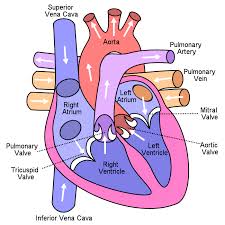
My favorite part was looking at the heart. The heart is so interesting to me and being able to hold it in my hands was so cool and fascinating. Looking at the heart I was able to differentiate some of the different parts.
IMG_1101
Holding the real pig heart I was able to feel the thickness of the aorta and the thinness of the atrium. We cut into the atrium slightly to see that it actually is a thin layer. Seeing characteristics like these help me understand more about heart and each of its structures and functions. To me the heart really was my favorite part and learning about the circulatory system. This system is one of my favorites to learn about.
Unknown-1
Overall, the fetal pig dissection was a successful activity to learn more about the body systems. I loved dissection the pig and it was a great way to have fun while learning!!
“Heart Diagram.” Wikimedia. N.p., n.d. Web. 28 Apr. 2015.
Pictures taken by me and other lab members

Thursday, March 26, 2015

How Life Begins on Earth - The Ancient Folktales

BigBangTheoryTitleCard
"Our whole universe was in a hot dense state,
Then nearly fourteen billion years ago expansion started. Wait..."

If you are a "The Big Bang Theory" fan, you will probably be very familiar with the lines above. If you are not, it is totally okay, because today we are not going to talk about the episodes of  "The Big Bang Theory" , we are going to talk about the real Big Bang Theory and reveal some interesting stories about how life begins on earth.

In truth, people in today's society will accept the big bang theory. At the very beginning, the early atmosphere was toxic, and a constant asteroid bombardment churned the landscape into a worldwide ocean of molten rock. As soon as the environment settled down to be relatively habitable, life appeared.
images
 
However, because of the lack of technically advanced tools, ancient people were unable to discover the scientific aspect of the formation of primate life, therefore, they created many myths of the formation of the universe.

In the Korean folktale, for instance, heaven and earth were stuck together but not bonded each other. Then a gap opened between the heaven and earth so that heavy subjects sunk, forming the earth. On another side, light subjects floated up, forming the sky. A blue drop of from the sky fell and caused a collision which made all creations of the universe except the Moon, the stars, and the Sun

Far from Asian countries, Egyptians had their own mythology too. They believed that at first, the world was a dark and milky place. One day, the God Atum cried and these tears gave birth to men and women. Later, Shu and Tefnut (Atum) had Nut (the sky) and Geb (the earth), who were lovers separated by Atum, but before they were separated, Nut and Geb gave birth to the main five Egyptian gods, and together made the earth a favorable place for human to live.

See! How interesting these myths are. What is your opinion of these myths? Do you know any myth created by other cultures? Please comment below!

Citation:
Citation of picture 1:
Picture 2:
Explosion. KeyWordPictures, 1 Jan. 2009. Web.http://www.keywordpictures.com/keyword/bigbang%20explosion

For further reading, please click key words below:

Sunday, February 15, 2015

Round-up: Darwin, Evolution and More!

This past unit has been a busy one for the AP Bio Team, as we covered chapters on Darwin, evolutionary theories, and even some math that goes along with the evolution of populations. We started off by covering the various theories of evolution and Darwin’s contributions that claimed organisms change and adapt, like the finches he researched. We watched various clips that discussed the Galapagos Islands and Darwin’s observations on the islands. There were also a couple of in-class discussions about these theories and Darwin’s journey around the world. These class discussions brought up a lot of good points about the way evolution was viewed has changed a lot over time and that Darwin’s journey was a pivotal change for how we view evolution. After various classes of watching videos and discussion, we moved on to the evolution of populations and the Hardy Weinberg equation.

Darwin's finches

We first discussed the ideas that populations have variations of alleles, or different versions of a gene, the frequency of these alleles can be determined and that allele frequencies change due to various factors such as natural selection, genetic drift and gene flow. Allele frequencies can be calculated using the Hardy Weinberg equation:
p2 + 2pq + q2 = 1
Initially this equation doesn’t look too inviting, however it is quite simple. “p2” stands for the frequency of homozygous dominant alleles in the population, “2pq” is the frequency of heterozygous alleles and you can probably guess that “q2” stands for the frequency of homozygous recessive alleles. This equation can be used to predict and describe what alleles and their frequency are in the population. 

Along with learning about the Hardy Weinberg equation, we discussed the five conditions that must be met for a population to stay the same and have no alterations in frequencies. These five conditions are:
Large population, random mating, no mutations, no movement, no natural selection

As you can probably assume, these conditions are not met in real life, however, it just shows the environment needed to have no changes in population. Also, as a class, we conducted a lab that involved the class “randomly mating,” using cards with “A” and “a” as different alleles, for five "generations," or rounds of mating, under various conditions. We counted how many people had each type of allele at the end and then calculated the before and after allele frequencies to practice using the Hardy Weinberg equation. It was a very fun and interactive lab that was enjoyed by everyone. 

After reviewing Hardy Weinberg, we then moved on to a virtual lab that looked at the evolution of Stickleback fishes. Each student went through the lab online, looking at how scientists identify differences in a Stickleback population by looking at the pelvic spines of living fish from various lakes and various fossils of Stickleback fish. These spines are present in some Stickleback populations, while other populations have very few individuals with a spine. This lab showed how the presence of the Stickleback spine in certain areas decreased over time due to their environment. Which means this lab demonstrated how an organism can adapt and change, or evolve, over time to suit the environment better. The Stickleback lab also introduced the idea of Chi-Square analysis, which is a statistical test done to determine the likelihood that the data is accurate and reliable. This statistical analysis is difficult to explain, but very useful in labs and experiments once understood.

Stickleback fish with and without pelvic spines 

Overall, this unit was very interesting, as it looked at the broader picture of life and evolution. The various in class activities and labs we did helped our understanding and I’m looking forward to see what we’re learning next! Thanks for reading!


Works Cited:
Gould, John. Darwin's Finches. Digital image. Wikimedia. Wikimedia, 27 Feb. 2012. Web. 15 Feb. 2015. <http://commons.wikimedia.org/wiki/File:Darwin%27s_finches_by_Gould.jpg>.

Shapiro. Convergent Pelvic Loss. Digital image. Shapiro Laboratory. University of Utah, n.d. Web. 15 Feb. 2015. <http://biologylabs.utah.edu/shapiro/Shapiro_Lab/Research.html>.