Friday, February 16, 2024

Ghost in Your Genes

As part of our genetics and biotechnology unit today we watched, Ghost in Your Genes, which was directed by Sarah Holt and Nigel Paterson as part of PBS’s science series NOVA…and holy cow! I have not been able to stop thinking about this documentary and the effects epigenetics has on my life. Who knew that your lifestyle and upbringing could be so closely related to who you are as a person!

Courtesy of PBS

I learned about so many interesting experiments. Such as one done on mice with an agouti gene that is switched on all the time blocking a receptor in the satiation center of the brain, leading the mice to be endlessly hungry. Scientists fed pregnant mice with the agouti gene a diet rich in B12 and folic acid which actually resulted in their babies having a methyl molecule tag on the agouti gene, making the babies skinny rather than fat. This was mind-blowing to me because this experiment truly emphasized how important aspects of your lifestyle like diet are on your future children. 

Courtesy of Wikimedia Commons

This also made me wonder…what effects could a highly processed diet during pregnancy have on one’s child? In Super Size Me, Morgan Spurlock ate every meal from McDonalds for a month and faced numerous repercussions. He gained 24.5 pounds, increased his cholesterol to 230 mg/dL, and experienced mood swings, sexual dysfunction, and fat accumulation on his liver. I am so curious as to whether this could have an effect on his epigenetic patterns. Or, if this would affect his children if he were to have done this experiment as a teenager when his gametes are formed. 

Courtesy of Youtube

Another experiment I enjoyed learning about was relating to rats. Scientists Michael Meaney and Moshe Szyf believed that experience itself could change the epigenome. So in order to prove this, two types of rats were distinguished: rats born to nurturing mothers, shown by licking and grooming, and rats born to mothers who embodied the “nature” in nature versus nurture (did not lick or groom). The results of the experiment demonstrated that the behavior of the mother during early development has an impact on offspring years later. Less nurtured rats had multiple epigenetic marks silencing a gene that lowers levels of stress, where nurtured rats better handled stress because nothing was dimming the gene’s activity that lowers stress. Crazy!

Courtesy Amoeba Sisters

This experiment demonstrates how maternal behavior can essentially sculpt the genome of one’s babies. Which reminds me of an experiment my friend in AP Psychology told me about that was done in the 13th century by Frederick II who was the German king at the time. He wanted to see what language babies would naturally grow up speaking without any intervention. In doing so, Frederick II ordered a group of babies to be separated from their mothers and taken care of by different nurses who did not speak or touch the infants affectionately. The result? All the babies died, leading people to believe (with insight from current-day research) that humans cannot flourish without the influence of love. Dr. Dean Ornish believes love and survival are coexisting factors to our existence, and anything that does not promote love leads to premature death.

Courtesy of Wikimedia Commons

Dr. Dean Ornish also discussed how when asking a wide range of scientists, “why are human beings so vitally dependent on love?”, the general consensus was that there is no clear answer. This makes me think of epigenetics and how expressing love during one’s upbringing can have such a significant impact on one’s personality and lifestyle. For example, in the documentary scientists discussed how our personalities are linked to our epigenome. Abuse, neglect, and harsh discipline during a child’s upbringing can lead to that child later getting diabetes, heart diseases, obesity, and depression.

Now I’m wondering…could having a religious upbringing or lifestyle affect one’s epigenetics? A study demonstrated that, “frequent attendance at religious services was associated with significantly lower risk of all-cause, cardiovascular, and cancer mortality among women”. When reflecting on this result, the idea that religious people constantly feel loved or even “nurtured” by God, and the positive results from the mice who were nurtured, I am inclined to think that a religious upbringing can affect one’s epigenetics.

Courtesy of Wikimedia Commons

This documentary also made me think about the lifestyle choices my grandparents made after hearing about the amazing discovery done by Lars Olov Bygren and Marcus Pembrey. By studying the births, deaths, and harvest of a Swedish village in the Arctic Circle the two scientists discovered a significant link between the diet in one generation’s effect on the life expectancy of another. This reminds of medical pedigrees and how with genetic information and additional data, we can find important patterns within our families that help inform us on what lifestyle choices to make depending on whether we are predisposed for any genetic conditions. 


Wow! How crazy is it to think that the human genome project was just the beginning of an endless discovery! I genuinely learned and gained so much newfound curiosity from Ghost in Your Genes and cannot wait to keep learning about epigenetics! Remember, DNA is not your destiny!

It may get to a point where they [humankind] realize that you live your life as a sort of guardian of your genome. It seems to me you’ve got to be careful of it because it’s not just you…you’re also looking after it [genome] for your children and grandchildren. It is changing the way we think about inheritance forever.
- Marcus Pembrey, Ghost in Your Genes


Tuesday, February 6, 2024

Genetics & Health Symposium - Down Syndrome


I completed this project with two of my classmates, Annette, and Tila and we decided to create a podcast called "Down for Bio".

Introduction
When my teacher introduced the Genetics and Health Symposium I knew right away that I wanted to study Down Syndrome as DS is a condition that has affected my family in the past. It was just my luck that two amazing AP Bio Teammates of mine also wanted to study Down Syndrome, we were grouped together and worked very well as a group. Watch and Listen to our Podcast below!


Reflection
Down Syndrome is very interesting and there was certainly a lot to learn and discover. Part of the assignment was to conduct an interview with someone who is directly impacted or works with people with the condition, in our case Down Syndrome. As you saw, we interviewed one of Annette's friends, Marianna who volunteers with Down Syndrome individuals in Amman, Jordan as well as Dr. Phillip who is a Pediatric Anesthesiologist. The interviews were a great experience, and having two different view points, one from a volunteer prospective and one from the medical perspective gave us great insights.

My group and I edited our video and added visuals through Canva, which improved my media skills and I can now create more advanced projects through the platform in the future. I am very proud of the work we put in, and this was by far one of my favorite projects we have done thus far.


"Extra Chromosome, Extra Love"

- Marriana Haddadin


Genetics Symposium - Melanoma


Introduction

Gabby and I chose to do our symposium on superficial spreading melanoma (SSM). Superficial spreading melanoma is a skin cancer that typically develops due to UV exposure but can also be inherited. SSM is the most common type of melanoma, so it is important to educate yourself on the cancer. Watch the video below to learn more about the genetics of melanoma and how to protect yourself if you are at risk!


Reflection

So, what did you learn? I personally learned a lot about the dangers of UV rays, especially tanning beds, and how melanoma can be inherited. I was so interested to hear about mutations in the BRAF gene being a cause of melanoma. I find it really amazing that scientists have been able to identify a specific gene that causes melanoma. Learning about how to treat melanoma was also super interesting to me because I was able to do in-depth research how each treatment directly attacks melanoma cells, which reminded me of our unit on viruses. I am so glad that doctors have discovered so many different types of treatments so melanoma is much easier to treat. I'm really happy with Gabby and I's video. I had a lot of fun creating this video because we worked really well together and used our time wisely so we had extra time to add fun things. I think next time, we could focus more on the timing and making sure we have enough time for everything because originally we were supposed to have two interviews but had to cut one out due to timing. I also think we could have been more mindful about the length of the interview because the interview is a big chunk of our video. I really enjoyed the crash course style because this style is really engaging and also really fun! I'm also very happy with our visuals because they are very specific to our research so the visuals really add to the video and the meaning of our research. I was also really proud of the research that we conducted because the research is very informational and could be helpful for a lot of people watching the video. Overall, I'm really happy with our video!

Works Cited

Bradford, Porcia T. “Skin Cancer in Skin of Color - PMC.” NCBI, https://www.ncbi.nlm.nih.gov/pmc/articles/PMC2757062/. Accessed 30 January 2024.

“BRAF Mutation and Cancer.” Johns Hopkins Medicine, https://www.hopkinsmedicine.org/health/conditions-and-diseases/braf-mutation-and-cancer. Accessed 26 January 2024.

“How does the sun and UV cause cancer?” Cancer Research UK, 30 November 2023, https://www.cancerresearchuk.org/about-cancer/causes-of-cancer/sun-uv-and-cancer/how-does-the-sun-and-uv-cause-cancer. Accessed 30 January 2024.

“Melanoma Treatment.” Memorial Sloan Kettering Cancer Center, https://www.mskcc.org/cancer-care/types/melanoma/treatment. Accessed 25 January 2024.

Morrison, Deborah K. “MAP Kinase Pathways - PMC.” NCBI, https://www.ncbi.nlm.nih.gov/pmc/articles/PMC3536342/. Accessed 29 January 2024.

Oakley, Amanda. “Superficial spreading melanoma.” DermNet, https://dermnetnz.org/topics/superficial-spreading-melanoma. Accessed 25 January 2024.

“The significance of BRAF V600E mutation status discordance between primary cutaneous melanoma and brain metastases: The implications for BRAF inhibitor therapy.” NCBI, 1 December 2017, https://www.ncbi.nlm.nih.gov/pmc/articles/PMC5728729/. Accessed 25 January 2024.

“673 - Gene ResultBRAF B-Raf proto-oncogene, serine/threonine kinase [ (human)].” NCBI, 22 January 2024, https://www.ncbi.nlm.nih.gov/gene/673. Accessed 29 January 2024.

“Superficial Spreading Melanoma.” Memorial Sloan Kettering Cancer Center, https://www.mskcc.org/cancer-care/types/melanoma/types-melanoma/superficial-spreading-melanoma. Accessed 25 January 2024.

“Superficial spreading melanoma.” Cancer Treatment Centers of America, 20 October 2022, https://www.cancercenter.com/cancer-types/melanoma/types/superficial-spreading-melanoma. Accessed 26 January 2024.

Timothy DiChiara, PhD. “LDH Tests Can Help Your Healthcare Provider Determine If Skin Cancer Has Spread.” Verywell Health, Verywell Health, 20 May 2023, www.verywellhealth.com/guide-to-the-ldh-test-for-melanoma-3010749

Monday, January 22, 2024

Cracking your Genetic Code

I enjoyed watching this documentary, as it highlighted the complexities of the ethical reasoning behind genetic sequencing and presented the pros and cons of getting your genome sequenced and having that information published. 

The health benefits of getting your entire genome sequenced can very easily save your life. In a future where getting your entire genome sequenced is as easy as a prick on the heel as an infant, it may save many lives like Alexis Berry, who presented with symptoms of cerebral palsy as a child but ultimately learned that their symptoms were due to a rare mutation that suppressed two critical brain chemicals. After receiving those drugs, almost all their symptoms went away. The ethical dilemma of learning your genome as a young child is the future of designer babies, where they are able to create their own babies with specific traits hand-selected. 


A movie that demonstrates the possibility of an elite race is the movie Gattaca, a play on words, seeing as it is spelled entirely of DNA nucleotide bases. The movie shows how families are able to handpick traits to make the best possible offspring. When these kids grow up, employers want the best of the best and force others who do not have it to work low jobs. In the movie, they find out that the protagonist is not a part of this elite race when they find loose hair on the floor and sequence its DNA. They bring it up in the documentary, showing just how easy it is to sequence someone’s DNA without them knowing, known as genetic hacking. From getting your haircut to going out to eat, it is difficult not to shed your DNA everywhere. 


A great point was brought up in the documentary, one of identifying humans. In the world today, we use our passports, driver's licence, social security number, and name to identify ourselves. In the world of tomorrow, we may be presented with the choice of instead using our DNA to identify ourselves, like how we all use our fingerprints. This makes portraying someone else much harder, but it also publicizes your genetics more.


A major ethical issue with sequencing your entire genome is your insurance company, job, and possible spouse finding out. If you are presented with a genome putting you at a 2-fold chance of developing heart disease or Alzheimer's, your insurance company may deny your health or life insurance, something that is legal in many US states. Same for your job, imagine finding out that the person you hire has a high risk of getting cancer, dementia, or a heart attack. Would you hire them over someone with no chance? Even your spouse may find it harder to compare your genome with your partner, deciding whether or not reproducing with them may create good offspring. Even if you hide your DNA and never voluntarily sign up to get tested, genetic hacking may let them find out anyway.


Like what we have seen with Ozempic, I worry how the public will abuse genetic sequencing and splicing. They brought up designer babies, which I don't doubt people will cling to when they become useable for the public. From choosing eye color to hair color, people will be able to hand-select traits like a fashion video game, and that scares me. While I'm on board with sniping out diseases and conditions you may fall victim to due to your lineage, I think that the ability to design your baby stops there.

Personally, I would want to get my genome sequenced, but I would want to filter my results. I would only want to learn about possible diseases or conditions where there are things in place for me to fight them, like getting more screenings for a certain cancer. I do not want to know my chances for fatal diseases with no cure, like Alzheimer's or Huntington's, where I know that the anxiety of learning that information would smother my life with anxiety.


This image has an empty alt attribute; its file name is national-cancer-institute-bwmhq_itmmu-unsplash.jpg

Wednesday, December 6, 2023

Entering the Platinum Age of Virus Discovery

Entering the Platinum Age of Virus Discovery

By: Nicole Fong
December 6, 2023

My AP BIO class had the amazing opportunity to virtually meet and speak with Artem Babaian and Purav Gupta! Babaian, the laboratory leader for RNA-Based Lifeforms, taught us about his team’s discoveries with Earth’s RNA viruses and Coronavirus with state-of-the-art computational approaches. Gupta spoke about how the team uncovered an RNA virus concealed in a parasite.

The presentation was recorded on the YouTube channel, “Exploring by the Seat of Your Pants.” Click the video below to watch!


Are there missing Coronaviruses?


Artem Babaian explained that SARS-CoV-2 was predicted to have infected 80+ mammal species, but the infection is now reported in over 24 mammals.

He wanted to answer the question: Are there missing Coronaviruses?


Babaian and his team created a cloud computing architecture called Serratus that efficiently analyzes an enormous volume of data. Serratus can search around 1 million datasets a day! Using public databases to collect data and Serratus to analyze the data, the team found more than 130,000 novel RNA viruses in 11 days!


I found it fascinating how technology and science can work together to discover more about life on Earth. All the biologists in the world took over 130 years to discover the first 15,000 RNA viruses, but Babaian and his team were able to find more in a much shorter time.

The team also uncovered segmented coronaviruses, in which the viral genome is represented on two molecules, in aquatic life. This disproved the textbook definition that all Coronaviruses have one molecule. The finding answered his original question!

Babaian and his team are able to use their laboratory to dive further by trying to identify the newly found RNA viruses or figuring out which virus causes cancer or Alzheimer’s.


A Parasite Odyssey: The Trojan Horse


Purav Gupta spoke about Toxoplasma gondii, a single-celled parasite that infects all warm-blooded animals and causes toxoplasmosis. The team investigated T.gondii to determine if a virus could infect the brain and lead to brain inflammation and Alzheimer's. Finding a virus that caused Alzheimer's would help create a vaccine to prevent the onset of Alzheimer's in the future.

The team’s hypothesis: An RNA virus in the brain causes Alzheimer's.

Using tests from a 2017 study, Gupta and his team analyzed and found RUB (pronounced as “Ruby”), a T.gondii strain present in a fair amount of brain tissue. In a 2013 study by Melo, the COUGAR strain was also found in T.gondii. The team analyzed the data from Melo and deduced that an RNA virus was present in two hypervirulent strains.

Why aren’t the other T.gondii strains present?
The atypical strains were capable of inducing high levels of expression, but the most potent were RUB and COUGAR.


Gupta and his team concluded that: There was an RNA virus concealed in a parasite, similar to a Trojan horse.
Toxoplasma Gondii strains that have the virus lead to a huge immune response in the brain.

Overall, I was impressed by the team’s level of dedication to finding and analyzing an immense amount of research to create new discoveries. I learned how we have barely scratched the surface of finding and understanding all of Earth’s viruses. However, as technology and science progress, we will soon learn more about ourselves and our history.
Advertisements

Here’s a curious question: If segmented coronaviruses are found in aquatic life, could the segments also be found in humans? How many viruses have become a part of our DNA?


Monday, November 27, 2023

Amazing Fungi! – Pursuing Treatment


Amazing Fungi! – Pursuing Treatment

Scientists currently do not know how to treat fungal infections! Could this lead to a zombie apocalypse?! There are zombie ants living in the Rainforest right now which have been taken over my fungi. Will this transport to humans?! Watch our video to discover more!


Photo by Chris G on Pexels.com

The curious question “Why are producing fungal vaccines so hard” is what led our investigations into fungi. We researched what traits allow the organism to infect as well as how the infection could be treated. Fungi are REALLY cool! Many people, including myself, before I did this project, put bacteria and fungi into the same general group. Interestingly, these two categories of organisms are very different. In fact, fungi are more similar to humans than they are to bacteria. While fungi and bacteria are both on the smaller side of organisms and are similar on an intelligence level compared to humans, the reproduction process and treatment against them could not be more different. Fungi reproduce like humans, making a different version of the parent every time they reproduce, while bacteria’s offspring is just a copy of the bacteria they came from. This makes fungal infections extremely hard to treat compared to bacterial infections for reasons we explain in our video.


Savannah and I had a really fun time creating this video! The animations and transition came together in a video which we are very proud of. Researching about fungi and finding thought provoking studies was so cool! I enjoyed this project a lot.

Tuesday, November 14, 2023

Bonnie Bassler – How Bacteria Talk

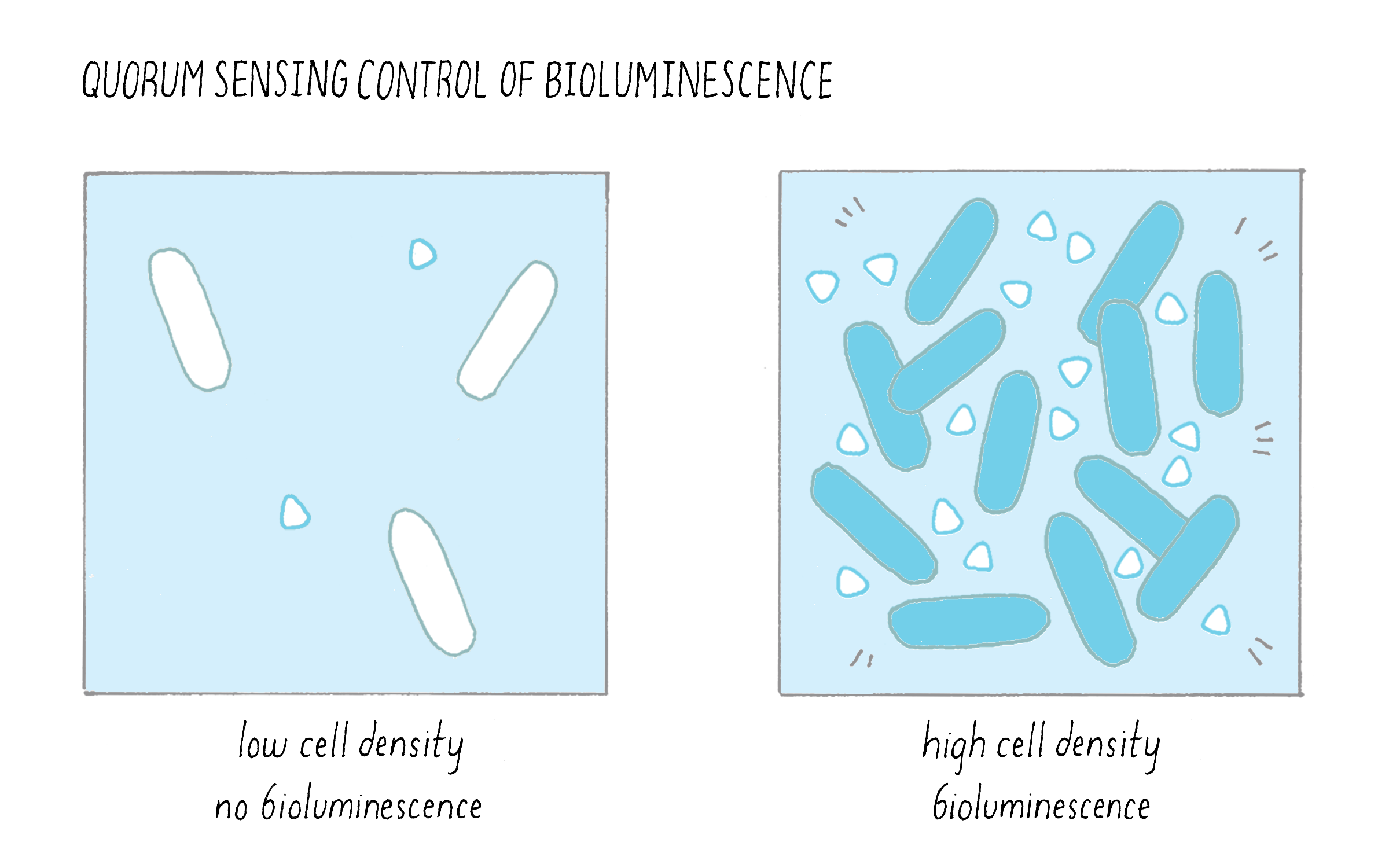
     I learned that bacteria are the oldest living organisms on earth, and they only have one piece of DNA. Bacteria can be inherently harmful, causing Lyme disease, toxic shock, food poisoning, and many other conditions. They can also be inherently good, keeping us alive, covering our bodies, keeping environmental factors out, digesting our food, making vitamins, and educating our immune system. Bacteria do not act as individuals. Instead, they work together to function. They do this by talking through a chemical language by secreting molecules that tell the bacteria to function. This was discovered by studying a squid that lives symbiotically with vibrio fisheri, a bacteria that emits bioluminescence. They discovered that this bacteria would only emit light when there was a specific density of bacteria in the area. This was because the bacteria produce auto-inducer molecules that can detect ‘sibling’ bacteria in the area.

Quorum Sensing | Bacterial Communication | by Bonnie Bassler

(Quorum Sensing | Bacterial Communication | by Bonnie Bassler)

    What I found the most interesting was how bacteria communicate to see how efficiently they can harm their host. The bacteria can produce there chemical signals that are unique to their species of bacteria, but there are also Quorum Sensing molecules that can sense for antigens, pathogens, and many other factors. With this knowledge, they know whether or not their density of bacteria will efficiently work. If their concentration is greater than others around, then they will produce their virulent properties. I found it interesting that scientists can interfere with these chemical signals in new types of anti-bacterial medications to tell the bacteria not to harm the host.

    I want to share with my audience that you should always keep exploring and being curious. This is very new in the world of science and would have never been discovered if it weren’t for Bonnie Bassler‘s curiosity. She said to our class to never be discouraged when doing something hard, and I hope that that is a message readers take with them.

    Her talk made me curious about what innovations will come and how this new technology will develop. It also makes me wonder if, after all this research and energy, the new anti-bacterial medications will work.


Works Cited:


“Bacteria and the Power of Teamwork | Bonnie L. Bassler.” Princeton University, The Trustees of Princeton University, basslerlab.scholar.princeton.edu/news/bacteria-and-power-teamwork. Accessed 26 Nov. 2023.


Bassler, Bonnie. “How Bacteria ‘Talk.’” Bonnie Bassler: How Bacteria “Talk” | TED Talk, http://www.ted.com/talks/bonnie_bassler_how_bacteria_talk?language=en. Accessed 26 Nov. 2023.


BL;, Miller MB; Bassler. “Quorum Sensing in Bacteria.” Annual Review of Microbiology, U.S. National Library of Medicine, pubmed.ncbi.nlm.nih.gov/11544353/#:~:text=Quorum%20sensing%20is%20the%20regulation,a%20function%20of%20cell%20density. Accessed 26 Nov. 2023.


“Bonnie L. Bassler | Department of Molecular Biology.” Princeton University, The Trustees of Princeton University, molbio.princeton.edu/people/bonnie-l-bassler. Accessed 26 Nov. 2023.

Monday, November 6, 2023

How Bacteria Talk

 How Bacteria Talk

Dr. Bonnie Bassler has been a part of research to understand bacterial behavior for 30 years. Over her time as a researcher, she has made many groundbreaking discoveries that have led to advancements in bacterial breakthroughs. 

To begin, it is crucial to understand that bacteria are the Earth’s most ancient organisms. Previously, people believed that bacteria were very primitive and they have only been known about for 500 years. Until recently, scientists have believed that bacteria are asocial, as a result of their primitiveness. This is entirely untrue. People are constantly collaborating with their microbiomes and microorganisms, they give us vitamins, help digest vegetables, help the immune response, and more. This is due to the communication between individual bacteria. 

This breakthrough in bacteria was discovered by looking at squid symbiosis. The vibrio fischeri bacteria provides bioluminescence for the Bobtail Hawaiian Squid when it goes out to hunt at night. The squid has sensors on its back to measure the amount of moonlight refracting through the ocean. The bacteria then adjust its concentration accordingly, and the squid can camouflage itself from predators and prey. For more information on the squid, watch below!

[youtube https://www.youtube.com/watch?v=x5-VcJyZRc4?si=3BwKTaJfR4BB_Diy&w=560&h=315]

The reason this works is because of bacterial quorum sensing. Each bacteria releases autoinducer molecules that sense the presence of other bacteria. When the molecules sense a certain concentration of other bacteria, that will cause the bacteria to light up or to act according to their species. Bacteria also have sensors for other species of bacteria and even eukaryotic cells. 

The part that I found the most interesting was that by using these discoveries, scientists can use them to stop the pathogenicity of clinically relevant bacteria. People are in the process of creating molecules that interrupt bacterial quorum sensing. Some are inhibitors that block the response of bacteria to these molecules, rendering them “deaf,” or overstimulating the bacteria with false molecules that will cause the bacteria to act too soon and reveal themselves to the immune system. These are incredible breakthroughs that are eliminating the need to depend on antibiotics.

Saturday, November 4, 2023

BLOG POST #4: Bonnie Bassler - How Bacteria Talk - Cam Brady


BLOG POST #4: Bonnie Bassler - How Bacteria Talk

This image has an empty alt attribute; its file name is bonnie-brassler-ted-talk.jpg

I learned many things when watching Bonnie Bassler’s presentation. I thought it was very generous of her to come on and spend time talking in real time with us and even answering some of our questions. Before learning from Bonnie I thought what she said most people believe about bacteria is that they live a boring life/ are asocial and just harm humans. Now I know, they do so many beneficial things for us, like, they act as an invisible body armor, digest food, make vitamins, and even educate the immune system. I also learned they talk with chemical language (think like human hormones) to do things like come together/ obtain a high enough cell density and turn on their light simultaneously; bioluminescence. This is scientifically called quorum sensing and the process starts with all bacteria talking to each other by making chemical words, they then recognize those words, and turn on group behaviors that only work in unison. This is also used in virulence as bacteria will get in you and wait, then they start growing, count themselves, and recognize when they have the right cell number, they can launch an attack and be successful. Something I thought was so interesting was that humans have 10 times more bacteria cells than human cells and 100 times more bacteria genes than human genes at all times. I also love the visuals Bonnie showed as she talked as it helped me visualize what is actually happening in our body as she spoke! If I get the chance to speak to Bonnie again, some questions I have for Bonnie are “why can’t we feel the bacteria on us?” and  “how do we distinguish good vs. bad bacteria?” Both of these questions came up for me because she mentioned we cannot see bacteria with a naked eye but not why can’t we feel them and she mentioned how bacteria can be good and can be bad but I would have loved for her to tell us how we know the good from the bad? What are the characteristics that stand out?

If you guys want to check out Bonnie talking about this interesting subject in more depth, check out her amazing TedTalk here:

https://www.ted.com/talks/bonnie_bassler_how_bacteria_talk?language=en

This image has an empty alt attribute; its file name is images.jpg

Tuesday, September 12, 2023

Spillover Documentary

 Spillover Documentary - Gabby Lonardo

Spillover- Zika, Ebola, and Beyond

After watching the documentary, I learned about the origins and devastating effects of both Ebola and Zika virus. I was slightly surprised at how the viruses tore through the communities. Since watching it, some questions I have are:

  • could our cells evolve to recognize and reject all outside genetic material?
  • why do diseases not infect their carrier (ex. why do mosquitoes not experience zika virus symptoms)?
  • can we genetically modify other species to not carry certain diseases?

Zika virus:

  • was around for a while and not considered serious at first
  • stops brain growth in infants
  • transmitted by mosquitoes

Ebola:

  • started from bats
  • transmitted through person to person contact and bodily fluids
  • usually strikes in isolated areas, but more populated areas make it easier to spread

Other interesting facts:

  • zoonotic disease = originated from animals
  • survivors of ebola experience lasting effects
  • bodies that die may still be infected and able to spread the virus 


Wednesday, September 6, 2023

FLOW - For Love Of Water

 FLOW – For Love of Water is an organization that focuses on making clean drinking water available to everyone in the world. FLOW emphasizes the idea that water is a human right and that everyone should be able to have access to it. 

FLOW created a documentary in 2008, sharing the idea that large water companies, such as Nestle and Coca-Cola, are withdrawing large amounts of water from communities and are making profit from it. These companies withdraw this natural water to create bottled water, while instead water should just be a natural resource. These companies sell these bottled waters for large amounts of money, as a way for the company to make profit. 


As I was watching this documentary, many things within this film surprised me. I was shocked by the idea that most bottled water companies do not truly get their water from freshwater sources. Most companies, such as Nestle, get their bottled water from the tap. This idea shocked me because it made me realize that people are spending tons of money to receive tap water. I was also surprised by the idea that dams are very harmful to communities. I never knew that dams affected people greatly. When dams displace people, their lives are forever changed. In the 20th century, 40 to 80 million people were displaced due to dams. The creation of dams can also create an increase of methane gas, leading to the Greenhouse Effect. 


After watching the entirety of the documentary, I learned that the filmmaker is trying to persuade the audience to stand up against the issue of large water companies withdrawing water from communities. The only way that these water companies can be stopped is through local efforts. We have to come together as a society and save our water. The filmmaker also wanted to inform the audience of the many water supply issues, such as water companies selling tap water. 


Since FLOW has been released, there have been many heated debates surrounding bottled water companies, such as Nestle and Coca-Cola. Within the documentary, many arguments were made in opposition of Nestle bottling water in Michigan. Despite these oppositions, a permit was passed, approving Nestle to increase the amount of water they withdrew from the state’s groundwater table from 250 gallons a minute to 400 gallons. Many people spoke up to oppose this permit. 81,862 people from Michigan filed complaints about the Nestle permit, and only 75 of those people were in favor of the permit. Although Nestle received a permit allowing them to increase the amount of water they withdrew, they never followed through. In 2021, Nestle surrendered the permit, and they never increased their withdrawal from Michigan. The water withdrawal increase would have fed a $36 million expansion of Nestle Ice Mountain bottled water. Coca-Cola also continued to withdraw groundwater from small communities after the documentary was created. In 2014, the water quality was said to have worsened tremendously. Another problem has arisen due to these water companies withdrawing. Most of these companies claim that they are being “bottled from the source.” This indicates that they are pulling this water straight from the ground, and are destroying the environments around it. 


Nestle’s effect of withdrawing water from Michigan. 


Click photo to access FLOW documentary.


Works Cited


“Clean Water for All – FLOW.” FLOW for Waterhttps://forloveofwater.org/clean-water-for-all/. Accessed 06 September 2023.


Dvc-Admin. “Which Bottled Water Brands Contain Tap Water?: Blog.” The Water Depot, 7 July 2023, https://thewaterdepot.com/bottled-water-brands-that-contain-tap-water/#:~:text=But%20did%20you%20know%20that,get%20from%20your%20kitchen%20faucet. Accessed 06 September 2023.


“FLOW For Love of Water – Watch Free Online.” Documentary Maniahttps://www.documentarymania.com/video/FLOW+For+Love+of+Water/. Accessed 06 September 2023.


Gray, Kathleen. “Michigan Oks Nestlé Permit for Increased Water Withdrawal for Bottled Water Plant.” Detroit Free Press, Detroit Free Press, 2 Apr. 2018, https://www.freep.com/story/news/2018/04/02/michigan-oks-nestle-permit-increased-water-withdrawal-bottled-water-plant/479896002/. Accessed 06 Sept. 2023.


“How Dams Affect People and the Environment.” How Dams Affect People and the Environmenthttps://britishdams.org/about-dams/dam-information/people-and-environment/. Accessed 06 Sept. 2023.


Tuesday, May 16, 2023

Exploring the Fetal Pig Dissection

Exploring the Fetal Pig Dissection

After all of our hard work as Team AP Bio, we were rewarded with the opportunity to explore mammalian body systems on our own with our fetal pig dissection!

This image has an empty alt attribute; its file name is screen-shot-2023-05-23-at-3.22.09-pm.png

The first day of the dissection, I was VERY intimidated by the fact that the pig was real. As someone who works in veterinary medicine, I had so much sympathy for the animal and did not want to make any incisions to its body. However, as you can see in these pictures, by the second day I was fascinated by the pig's bodily functions.

One thing that made me curious was when one of my teammates asked my teacher about the pigs' brains. Initially I had no intention of actually dissecting the brain, until my teacher mentioned that a few of her previous students had done it successfully. Hearing this, I went back to my table and cut an opening in the head, careful not to pierce through to the brain. I had originally just cut out of curiosity of seeing the brain, but then decided to remove it, which I did shortly after.

This image has an empty alt attribute; its file name is screen-shot-2023-05-23-at-3.21.34-pm.png

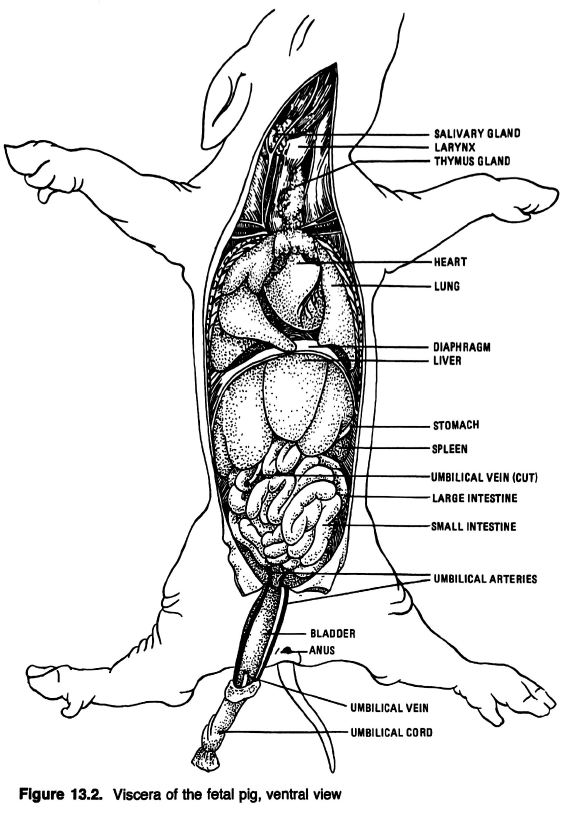
After the pig dissection, I have learned how to locate many parts of the body and name their functions. For example, I had always known what the job of the liver is, but I had no idea how large it would be in comparison to the rest of the body. I also learned that the diaphragm is a thin muscle that acts as a barrier between the respiratory cavity and digestive cavity.

Dissecting the fetal pig helped me learn more about our bodies as humans, and why we need to take precautions such as wearing helmets and seatbelts. I also learned more about where each internal organ is located, which will be good background knowledge for college, where I will be majoring in biology on the pre-med track. Overall, I am grateful for the experience we had and will always remember the dissection!


Monday, May 15, 2023

Fetal Pig Dissection

warning: this post contains diagrams of dissected fetal pigs that could cause nausea  
“For the things we have to learn before we can do them, we learn by doing them.” 
--- Aristotle


Aristotle's quote from The Nicomachean Ethics highlights the importance of practice during learning, which was why in AP Bio, our class participated in a fetal pig dissection practical. Observing and studying the internal structures of the fetal pigs would not only foster our understanding of body systems but also prepare us for more dissections in college biology classes. 

Intrdocution

Back in middle school, I did a dissection of a cow's heat. However, I was too nervous at the time to dissect or make observations about the real cow's heart. Therefore when I felt ready for the dissection, I volunteered to dissect the fetal pig to make up for what I missed out on previously, and gain more experience in dissecting since I am interested in majoring in a biology-related field in college.

Check out this @Behance project: "Fetal Pig Dissection Manual"  https://www.behance.net/gallery/72165099/Fetal-Pig-Dissection-Ma… | Pig  dissection, Dissection, Fetal

Exploration

Our class members were assigned into teams with three switchable roles, dissecting, note-taking, and setting up Z Space. Due to my interest in taking an active role in the dissection, I was honored to be chosen as the lead operator to dissect the pig with my teammates. When our team collected the assigned fetal pig, we found that the pig was different from our expectations --- dry, yellowish, and smelled of chemicals used to preserve the body. We also learned that because the fetal pig's veins and arteries were hard to discern from one another, the veins were dyed blue while the arteries were dyed red.

Fetal Pig Dissection Manual (BIOL 105)

Things always start hard and become easier. The first incision was intended to be made somewhere on the umbilical cord to show the cross-section of the pig's umbilical cord. Due to our inexperience and some squeamishness, we were unsure whether the cut should be made sideways or sever the cord. With the help from our teacher, Mrs. Girard, and support from one another, we soon became more able to follow the steps of dissection with more confidence and efficiency.

Anatomical Drawings of a Fetal Pig

The first body system we explored was the digestive system, which involved long cuts across the abdomen to open the cavity. The digestive system was the easiest body system to identify because it took up the majority of the space in the pig. With encouragement from my teammates, I cut off some skins from the pig's abdomen and we saw something surprising --- our fetal pig's abdomen was filled with blue dye, an error caused by an excessive amount of dye injected into the pig. Our teacher had to cleanse the pig for us to observe the pig properly. When the pig was brought back to us, we removed the organs from the pig to make closer examinations. Our team discerned four lobes from the liver, identified the pancreas as part of the digestive system, and discussed that the liver's function was to filter blood. There were also questions left unanswered and required information from outside sources. After doing some research, I learned that the gall bladder was responsible for storing bile secreted by the liver and the spleen was responsible for specialized immune cells, lymphocytes, to identify and fight pathogens.

Fetal Pig Dissection

By the time our team finished exploring the digestive system, I switched my role with other teammates and started taking notes. The respiratory and circulatory systems were the next body systems we explored, which required long incisions all the way up to the jaw from the abdomen. As soon as the pig's chest was opened, we saw pericardium surrounding the heart, which was a layer of thin film that would keep the heart in the chest cavity during movement. We discussed that the rings of cartilage surrounding the trachea were responsible for the movement of air since the trachea is crucial to draw air into the respiratory system. I also did more research which showed that in the circulatory system, the ventricle wall is thicker than the arterial wall because more muscles can be used to apply more pressure to fulfill the ventricle's crucial role in pumping blood out of the heart into arteries throughout the body.

Lab 7: Vertebrate Anatomy - OpenWetWare

The last body system, the reproductive system was the most challenging one to identify. We were running out of time and the reproductive system took a small portion of the pig's body. While exploring the pig's reproductive system, our team soon corrected a mistake we made --- we had assumed that we were assigned a female fetal pig. Our dissection revealed a pair of testis instead of ovaries in the pig's reproductive system. Our pig was also more mature compared with other teams', which meant that our pig had larger testis easier to observe compared to other ones.

Reflection

I am grateful to participate in the fetal pig dissection before the end of the year. The practical helped me to better understand the body system and familiarize myself with the process of dissection. I also enjoyed working with teammates to figure out how to proceed in the process and learn together. 


Works Cited

Fetal Pig Dissection Labs - Dr. J. Lim, https://www.shsu.edu/academics/agricultural-sciences-and-engineering-technology/documents/FetalPigDissectionLab_000.pdf. Accessed 23 May 2023.

“Circulatory system - Walla Walla.” Whitman College, https://www.whitman.edu/academics/majors-and-minors/biology/virtual-pig/circulatory-system. Accessed 23 May 2023.

“Digestive system - Walla Walla.” Whitman College, https://www.whitman.edu/academics/majors-and-minors/biology/virtual-pig/digestive-system. Accessed 23 May 2023.

“Histology & Anatomy of Fetal Pig - Lungs.” College of the Canyons, https://www.canyons.edu/academics/biology/resources/lab107/thoracic/lung.php. Accessed 23 May 2023.

“Umbilical cord.” Wikipedia, https://en.wikipedia.org/wiki/Umbilical_cord. Accessed 23 May 2023.